Radiologic comparative analysis between saline and plateletrich fibrin filling after hydraulic transcrestal sinus lifting without adjunctive bone graft: A randomized controlled trial
Abstract
Objectives: To evaluate implant survival rate, any complications, and changes in residual
alveolar bone height (RABH) using saline or platelet-rich fibrin (PRF) filling after
hydraulic transcrestal sinus lifting.
Methods: Dental implants were placed after hydraulic transcrestal sinus lifting and
the filling of saline (20 patients) or PRF (20 patients). Outcome measurements were
implant survival, any complications, and RABH changes. Cone-beam computed tomography
(CBCT) scans were taken and compared preoperatively (T0), immediately
postoperatively (T1), at 3 months (T2), 6 months (T3), and 12 months postoperatively
(T4), respectively.
Results: In a total of 40 patients, 45 implants with a mean length of 10.4 ± 0.8 mm
were placed in posterior maxilla of a mean RABH of 6.8 ± 1.1 mm. The increase in
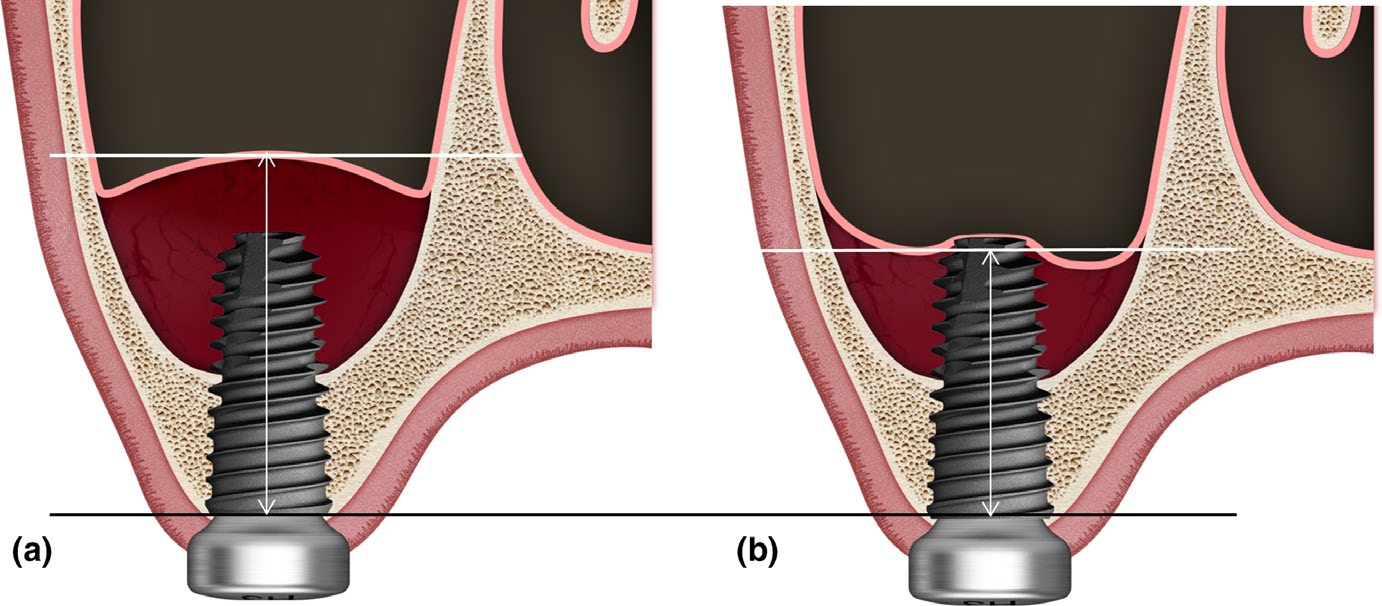
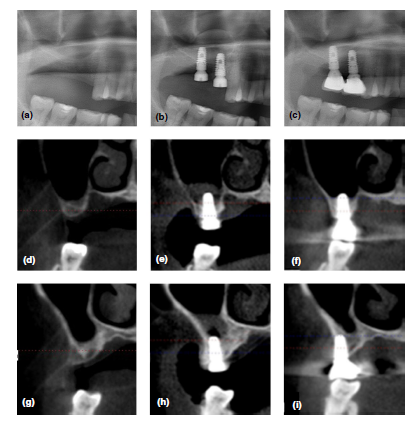
RABH peaked at T1, and continuous drooping of the sinus membrane was observed
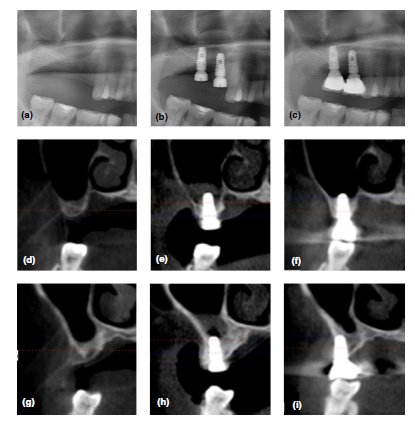
but stabilized at T3. Meanwhile, the gradual increase in the radiopacities was found
below the lifted sinus membrane. The PRF filling induced the radiographic intrasinus
bone gain of 2.6 ± 1.1 mm, which was significantly more than 1.7 ± 1.0 mm of saline
filling at T4 (p < .05). All the implants were in function with no significant complications
over the one-year follow-up period.
Conclusions: In this randomized case–control study, the feasibility of hydraulic transcrestal
sinus lifting without bone graft was confirmed and PRF might be a better
filler to support the elevated sinus membrane. However, adjunctive bone grafting
should still be indicated for cases requiring more than 2–3 mm of intrasinus bone
gain.
Galería